The Future of Work: How Automation is Shaping the U.S. Economy
Introduction
The world of work is undergoing a profound transformation, largely driven by technological advancements. Automation is at the forefront of this change, influencing various sectors across the U.S. economy with significant implications for businesses and workers alike. Automation refers to the use of technology to perform tasks that were previously done by humans. From factories to offices, the shift towards automated processes is not just a trend; it’s a fundamental change in the way work is conducted.
As automation continues to evolve, we see a shifting landscape characterized by:
- Increased Efficiency: Machines and software streamline tasks, leading to faster production rates. For instance, in the manufacturing sector, robots can assemble automobiles at speeds and precision levels unmatched by human workers. This not only accelerates production but also reduces errors and waste, which can lead to significant cost savings for companies.
- Job Displacement: Certain jobs may become obsolete, prompting workers to seek new opportunities. The rise of self-checkout systems in supermarkets is a prime example. While they enhance efficiency and customer experience, they also reduce the need for cashiers, forcing them to adapt to new roles or industries.
- Innovation: New roles and industries emerge as technology creates demand for specialized skills. The growth of the tech sector has led to the development of positions such as data scientists and AI specialists. These roles were virtually non-existent a few decades ago but are now critical for companies looking to leverage big data and machine learning.
Understanding the impact of automation on the economy is essential for both employers and employees. The future will likely require:
- Adaptability: Workers must be prepared to learn new skills to maintain their relevance. This might include enrolling in online courses to gain familiarity with new software or attending workshops on emerging technologies.
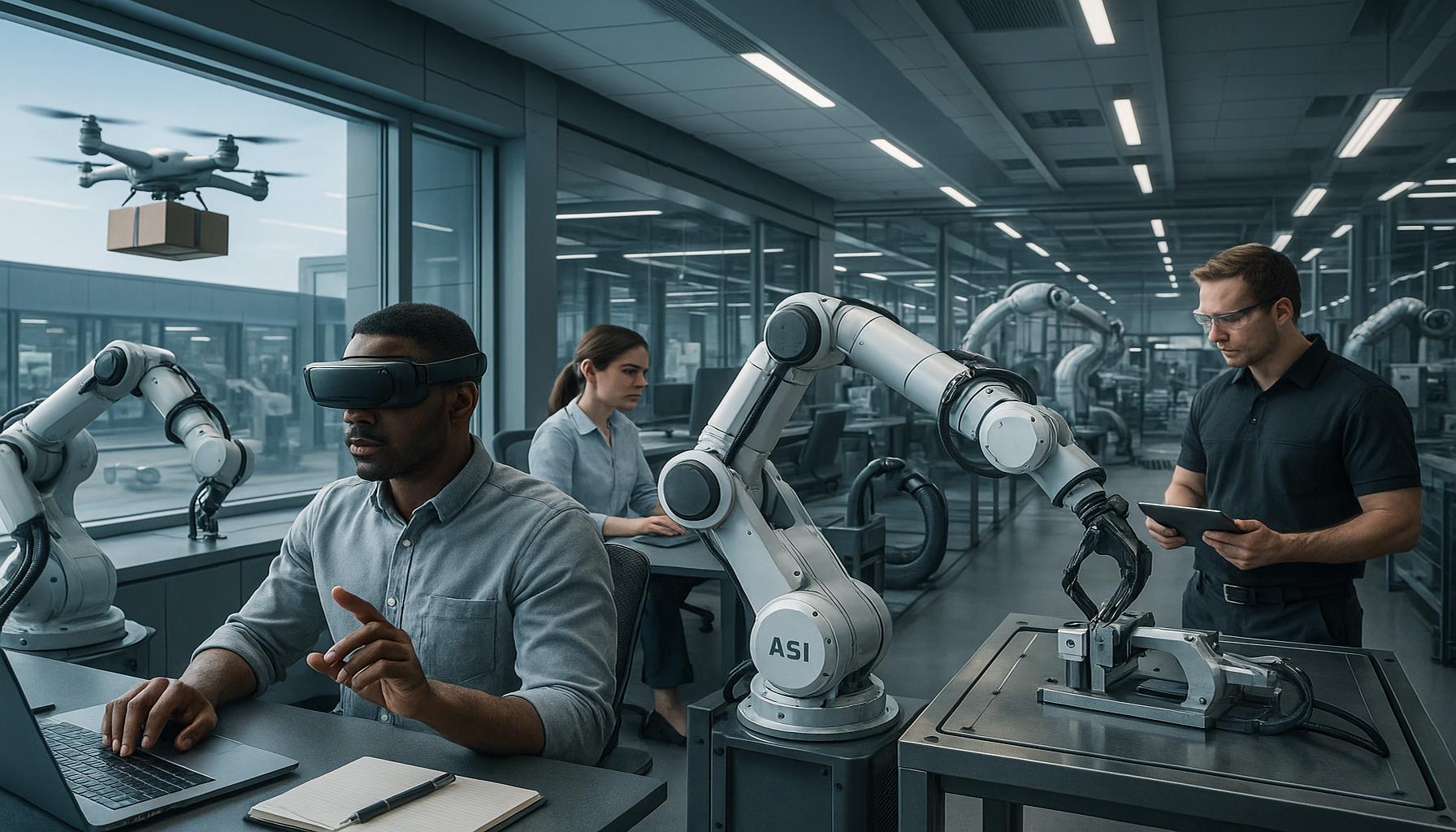
- Collaboration: Businesses need to embrace human-robot partnerships to maximize productivity. For example, in warehousing, workers collaborate with robotics to efficiently manage inventory, where robots handle repetitive lifting while humans focus on complex decision-making tasks.
- Strategic Planning: Policymakers will have to consider the long-term effects on employment and the workforce. This includes discussions around retraining programs and safety nets to support those affected by job displacement.
In this article, we will explore these themes in depth to better understand how automation is redefining work in the United States. By understanding these dynamics, both employees and employers can navigate this evolving landscape more effectively, ensuring that the benefits of automation are shared across the workforce.
The Current Landscape of Automation in the U.S. Workforce
As we delve into the implications of automation on the U.S. economy, it’s important to recognize its current landscape and diverse applications across various industries. The acceleration of automation has not only transformed production processes but also the nature of work itself. Here are several sectors where automation is making a significant impact:
- Manufacturing: Automation in manufacturing is perhaps the most visible and well-established. Robots are commonly used for repetitive tasks such as welding, painting, and assembly line work. This has led to a doubling down on production efficiency. For example, companies like Tesla employ advanced robotics to not only speed up car assembly but also to improve safety and quality control.
- Retail: In addition to self-checkout systems, retailers are utilizing automated inventory management systems that continuously track stock levels and reorder supplies when necessary. Amazon is a leader in this space, using robots in its warehouses to streamline the picking and packing process, drastically reducing the time it takes to fulfill orders.
- Healthcare: The healthcare sector is integrating automation through the use of AI for diagnostics and robot-assisted surgeries. AI algorithms can analyze medical images with remarkable speed and accuracy, allowing healthcare professionals to focus on patient care rather than administrative tasks. For instance, radiologists are now able to leverage technology to help identify conditions at much earlier stages than was previously possible.
- Finance: In finance, automation is revolutionizing tasks such as data entry, transaction processing, and even investment decisions through robo-advisors. These algorithms analyze vast data sets to make investment recommendations, which can be particularly beneficial for individual investors who may lack access to traditional financial advisors.
This widespread adoption of automation across these sectors is reshaping job roles and expectations. It is important to acknowledge that while many jobs may become obsolete, the demand for new skills and expertise is on the rise. Workers must adapt to this new reality, which emphasizes the need for continuous learning and skills development. This adaptability is not only beneficial for employees but also essential for employers looking to maintain a competitive edge in an increasingly automated world.
As we examine the implications further, it is crucial to consider the future of the workforce. The jobs of the future will increasingly require technical literacy, problem-solving abilities, and emotional intelligence—skills that machines struggle to replicate. Additionally, with automation streamlining certain processes, businesses will likely shift focus towards roles that require human creativity and interpersonal skills. Understanding these trends will help both workers and employers navigate the challenges and opportunities presented by automation.
The Emerging Workforce: Adapting to Automation
As automation continues to influence various sectors, it’s crucial to recognize that it is not merely about job displacement; it is also about the transformation of the workforce itself. The rise of automation necessitates a shift in how workers approach their careers and skill development. The future workforce will need to embrace change and evolve with technological advancements.
The demand for highly skilled positions is expected to soar as automation takes over more routine tasks. This means there will be increased opportunities in tech-centric roles such as data analysts, software developers, and AI specialists. For instance, according to the U.S. Bureau of Labor Statistics, jobs in the fields of computer and information technology are projected to grow by 11% from 2019 to 2029, much faster than the average for all occupations. This growth is indicative of the urgent need for a workforce ready to support and innovate within automated environments.
However, it is important to emphasize the importance of technical literacy. Workers in all sectors will need to become comfortable with technology, whether it means learning to operate advanced machinery in manufacturing or navigating sophisticated software in finance. Educational institutions and training programs play a critical role here. Initiatives that focus on STEM (science, technology, engineering, and mathematics) education can equip younger generations with necessary skills, while adults may benefit from reskilling programs that target specific industries—like coding boot camps for people seeking careers in tech.
The Importance of Soft Skills
In addition to technical skills, the future workforce will also hinge on soft skills such as communication, teamwork, and problem-solving. As automation handles repetitive tasks, human workers will be required to manage more complex, nuanced situations that involve creative thinking and interpersonal interaction. For example, teachers and healthcare professionals will increasingly rely on their ability to communicate effectively and empathize with students or patients—qualities that machines cannot replicate.
Moreover, industries such as customer service are evolving as well. While chatbots and automated responses are streamlining certain customer interactions, there remains a significant demand for human representatives who can engage with customers at a deeper level. This highlights the critical gap that soft skills fill in a world becoming dominated by technology.
The Role of Lifelong Learning
The concept of lifelong learning is becoming a necessity in the modern job market. Workers must adopt a mindset that emphasizes continuous education and growth. Many companies are recognizing this need and are investing in ongoing training and development opportunities for their employees. This not only helps workers stay current with new technologies but also fosters employee loyalty and satisfaction—essential components in retaining talent in a competitive landscape.
Ultimately, as technology progresses, both employers and employees must actively engage in this ongoing dialogue about skill development and adaptation. Together, they can create an environment that is not reactionary but proactive, preparing for a future where automation is not merely a threat but a powerful tool that can enhance productivity and innovation across all sectors of the economy.
Looking Ahead: A Collaborative Future with Automation
As we stand at the precipice of a new era within the workforce, it is clear that automation is not just a fleeting trend but a fundamental shift that is reshaping the landscape of the U.S. economy. The convergence of technology and labor has the potential to create a more efficient, innovative, and productive workforce. However, this transformation comes with its challenges that require proactive engagement from both employees and employers.
Recognizing the need for adaptive change is essential. Workers must embrace lifelong learning, continuously updating their skillsets to remain relevant in an evolving world. With the surge in demand for highly skilled roles centered around technology and creative problem-solving, there are boundless opportunities for those willing to adapt. Emerging fields offer not just jobs but also pathways to meaningful careers that contribute to economic growth.
Furthermore, the emphasis on soft skills cannot be overstated. As automation manages more routine functions, human qualities—such as empathy, communication, and critical thinking—will become invaluable. This highlights a significant opportunity for individuals who can bridge the gap between technology and human interaction.
Ultimately, the future of work will require a collective effort to ensure that both technological advancements and human insights coexist harmoniously. By fostering environments that prioritize education and collaboration, we can shape an economy that thrives in the face of automation. Embracing this future means acknowledging the potentials while actively preparing for the changes. In doing so, we can pave the way for a resilient, dynamic workforce that is not just surviving, but thriving in an automated world.

Linda Carter is a writer and financial expert specializing in personal finance and financial planning. With extensive experience helping individuals achieve financial stability and make informed decisions, Linda shares her knowledge on the Father Company platform. Her goal is to empower readers with practical advice and strategies for financial success.